
Industrial embroidery is a detailed production process that combines creative design, advanced embroidery machines, quality materials, and skilled workmanship. A well-organised production process helps manufacturers create accurate, attractive, and durable embroidery on garments and other textile products.
Understanding the industrial embroidery production line workflow is important for businesses that want to maintain consistent quality, reduce production errors, and complete embroidery orders efficiently.
What Is Industrial Embroidery?
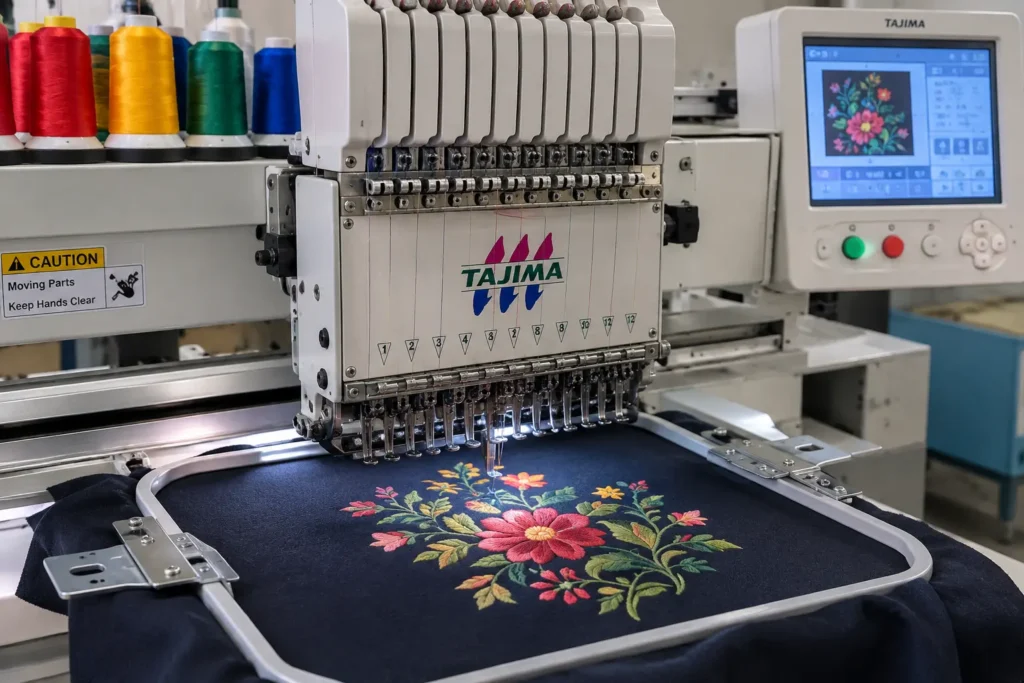
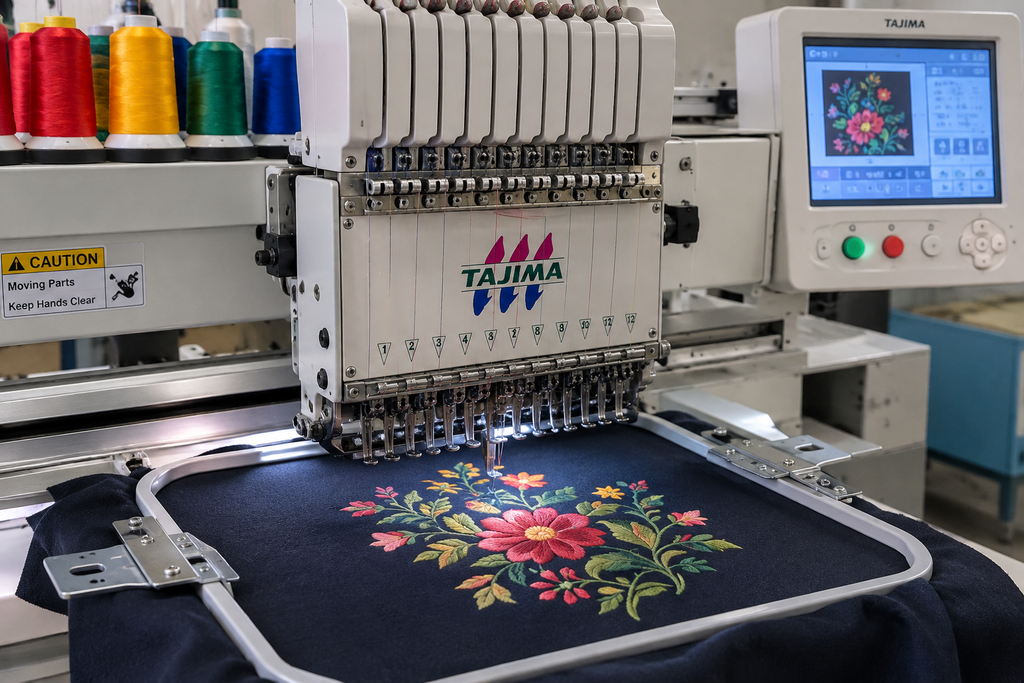
Industrial embroidery is the process of creating decorative designs, logos, patterns, and lettering on fabrics using computerised embroidery machines. Unlike manual embroidery, industrial machines can produce large quantities of products with high accuracy and consistency.
The production process involves several stages, starting with design preparation and ending with final inspection and delivery.
1. Design Selection and Digitisation
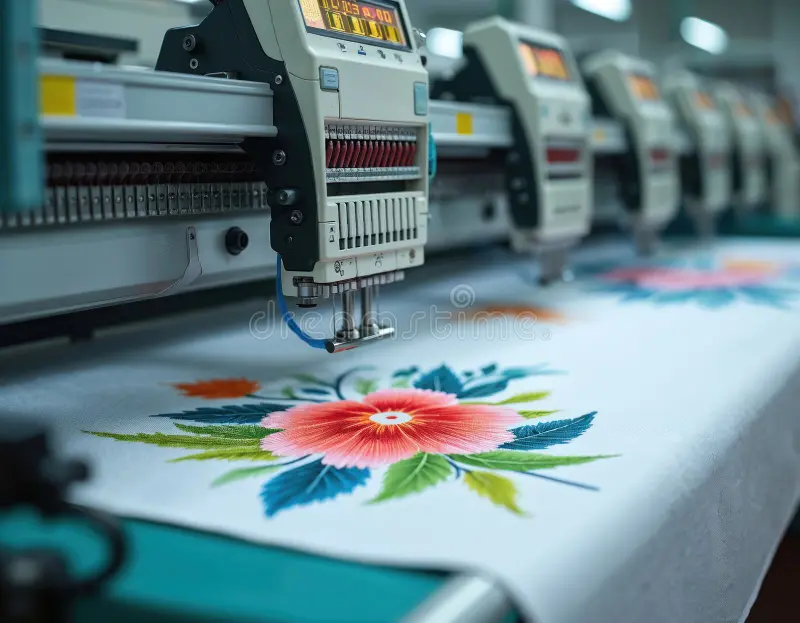
The first stage of the industrial embroidery production line workflow is design preparation. Customers usually provide a logo, artwork, text, or embroidery pattern.
The design is then converted into an embroidery-friendly digital format through digitizing. During this stage, important elements such as stitch direction, stitch density, underlay, thread sequence, and design size are carefully planned.
Good digitizing is essential because it directly affects the appearance and quality of the final embroidery.
2. Fabric and Material Preparation
After the design is ready, the required fabric and materials are prepared. The fabric may include garments, uniforms, jackets, caps, bags, denim, or other textile products.
The appropriate embroidery thread, needle, stabilizer, and backing are selected according to the fabric and design. Proper material selection helps reduce puckering, thread breakage, and fabric damage.
3. Machine Setup
The embroidery machine is prepared according to the production requirements. The digitized design is loaded into the machine, and the required thread colors are installed.
Operators check the needle, bobbin, thread tension, hooping, machine speed, and other settings before production begins. Correct machine setup helps ensure that the design is embroidered accurately.
4. Hooping and Positioning
Correct positioning is an important part of The Industrial Embroidery Production Line Workflow. The fabric is placed securely inside the appropriate embroidery hoop or frame.
The design position is checked carefully to ensure that the embroidery appears in the correct location on the product. Proper hooping also helps prevent fabric movement and design distortion during stitching.
5. Test Embroidery
Before starting full production, a sample or test embroidery may be produced. This allows the operator to check the design, thread tension, stitch density, colors, positioning, and overall appearance.
If any problem is found, adjustments can be made before producing the complete order. This step can help reduce material waste and production errors.
6. Machine Embroidery Production
Once the settings and sample are approved, the main embroidery production begins. Computerized embroidery machines follow the digitized design and create the required stitches automatically.
During production, operators monitor the machines for thread breaks, needle problems, skipped stitches, fabric movement, or other issues. Regular monitoring helps maintain consistent embroidery quality.
7. Thread Trimming and Finishing
After the embroidery is completed, excess threads are trimmed and unwanted backing material may be removed. The embroidered product is then checked for loose threads and other visible imperfections.
Proper finishing gives the embroidery a cleaner and more professional appearance.
8. Quality Inspection
Quality inspection is a critical stage of The Industrial Embroidery Production Line Workflow. Each finished product should be checked for design accuracy, stitching quality, thread tension, color consistency, positioning, and fabric condition.
Products that do not meet the required quality standards can be corrected or separated before final packing.
9. Packing and Final Delivery
After passing quality inspection, the finished embroidered products are prepared for packing. Products may be folded, labeled, counted, and packed according to the customer’s requirements.
Careful packing protects the embroidery during transportation and helps ensure that the order reaches the customer in good condition.
Why Is an Efficient Embroidery Workflow Important?
A well-planned production workflow offers several benefits:
- Consistent embroidery quality
- Better production efficiency
- Reduced material wastage
- Fewer stitching errors
- Improved order management
- Faster production and delivery
- Better customer satisfaction
An organized workflow also makes it easier for embroidery businesses to handle both small and large production orders.
Common Problems in Industrial Embroidery Production
Several problems can affect embroidery production if the process is not properly controlled. These may include thread breakage, incorrect thread tension, fabric puckering, skipped stitches, incorrect design positioning, and machine downtime.
Regular machine maintenance, proper material selection, skilled operators, and quality checks can help reduce these problems.
How RP Fashion Maintains Embroidery Quality
At RP Fashion, every stage of production is important for achieving professional embroidery results. From design preparation and material selection to machine embroidery and final inspection, proper attention is given to quality and consistency.
Following The Industrial Embroidery Production Line Workflow helps maintain an organized production process and supports reliable results across different types of embroidery projects.
Conclusion
Industrial embroidery requires more than just an embroidery machine. It involves a complete production process that includes design digitizing, material preparation, machine setup, hooping, test embroidery, production, finishing, quality inspection, and packing.
By following a structured workflow, embroidery manufacturers can improve efficiency, reduce errors, and deliver high-quality products. A properly managed production line is therefore essential for achieving consistent and professional embroidery results.
For businesses looking for reliable industrial embroidery services, understanding the complete production workflow can help them make better decisions about quality, production capacity, and delivery requirements.
VISIT HOME